When you walk into a home, what catches your attention first?
The kitchen? The natural light? The backyard where you can picture yourself enjoying morning coffee?
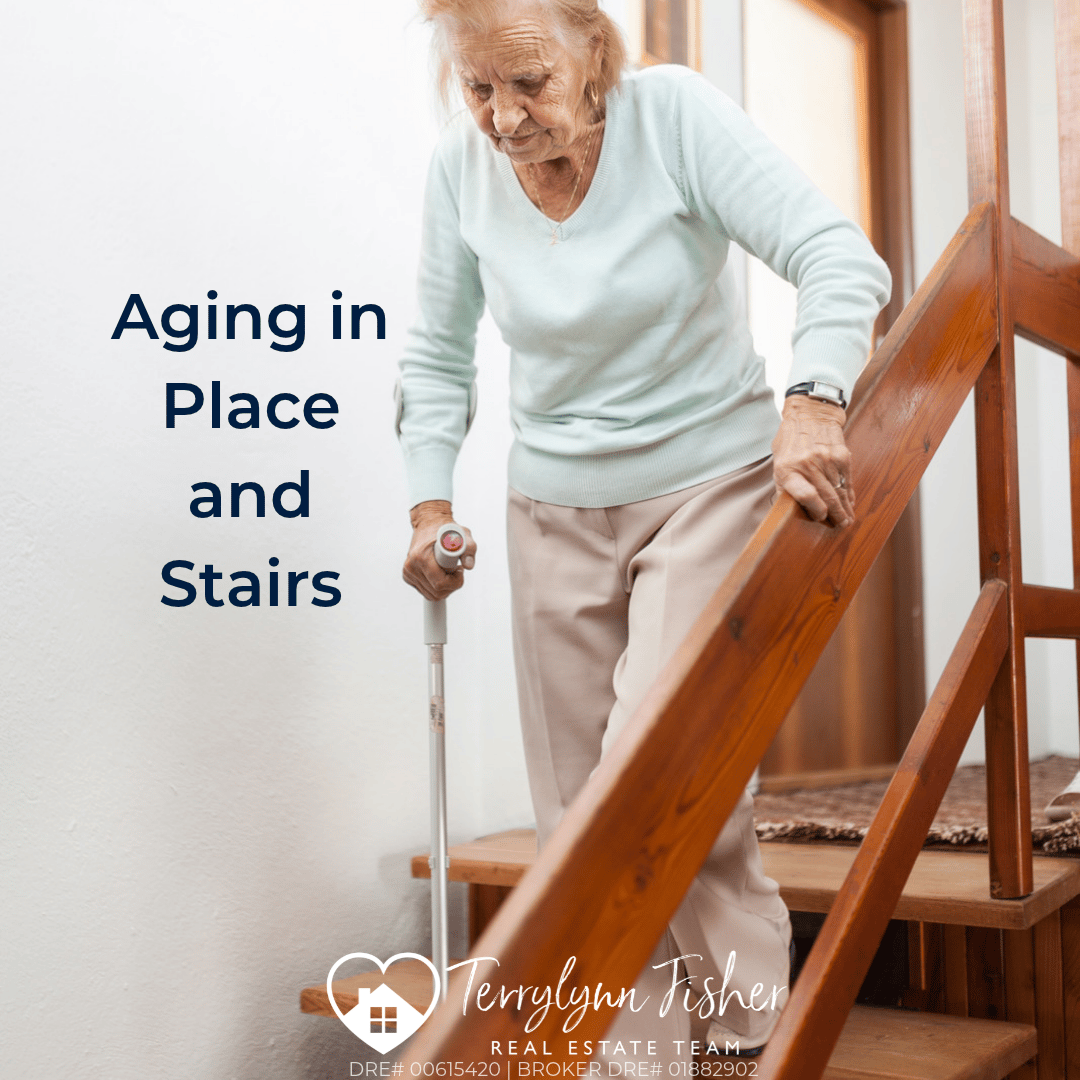
Those things matter. But if you are buying a home for retirement or hoping to stay there for years to come, there is another feature worth a closer look: the stairs.
If you are in your 50s or 60s, active, healthy, and constantly on the go, getting up and down stairs may not feel like a concern. You may barely notice them during a showing.
That is why I encourage buyers to look beyond the home they want today and think about flexibility for tomorrow.
You do not need to predict the future. You simply want to understand whether a home could continue to work for you if your needs change.
Think About How You Would Live in the Home
A beautiful floor plan is one thing. Moving through it every day is another.
During a showing, imagine your usual routine. Where would you sleep, shower, prepare meals, and do laundry? How often would you need to go up and down stairs?
Then consider how that routine would work if climbing stairs became uncomfortable or you temporarily needed to avoid them.
Could you manage your daily activities on one level? Or would essential rooms be spread across different floors?
Planning ahead is part of aging in place. The National Institute on Aging recommends evaluating a home room by room to identify potential safety and accessibility concerns before they become more difficult to manage.
Is There a Main-Level Bedroom?
A bedroom on the main living level is a helpful feature to look for—even if you plan to use an upstairs bedroom for now.
Perhaps the downstairs bedroom would initially serve as a guest room or office. Having that option gives you something to consider if your preferences or needs change.
If there is no main-level bedroom, ask whether another room could realistically be converted.
But be careful about assuming that any den, dining room, or sitting room can simply become a bedroom. Before relying on that plan, have qualified professionals evaluate the layout, applicable requirements, permits, and potential cost.
The question is not just, “Could a bed fit here?”
It is, “Could this become a practical, appropriate bedroom if I needed one?”
A Downstairs Bathroom Deserves a Closer Look
A main-level bedroom is only part of the picture. What about the bathroom?
A powder room may be convenient for guests, but it does not provide a place to bathe. If you needed to live downstairs, would you still have to climb stairs to reach a shower?
During a showing, consider:
Is there a full bathroom on the same level as the potential bedroom?
Is it easy to reach from the main living areas?
Does the layout offer enough room for your needs?
Is there a tub to step over or a shower with a high threshold?
Could modifications be practical if needed?
Do not assume a bathroom is accessible simply because it is downstairs. The layout and your individual needs matter.
The National Institute on Aging identifies bathroom features such as grab bars and measures to reduce slipping as important home-safety considerations. Any planned changes should be evaluated for the person who will use the space.
Can You Get Into the Home Without Stairs?
A home can be advertised as single-story and still have steps at the front door, between the garage and the house, or leading to the backyard.
That is why I like to look at the whole route—not just the rooms inside.
Imagine arriving home with groceries. Where would you park? Which entrance would you use? Are there steps along the way?
Ask:
Is there a step-free entrance?
Are there changes in floor level inside?
Does the garage entry involve stairs?
Can you comfortably reach the patio or outdoor area?
If an entrance needed modification, would that be feasible?
A ramp may be an option for some homes, but it should not be treated as an automatic fix. If step-free access is important, have a qualified professional assess what the property can accommodate before you count on a future modification.
Where Is the Laundry?
Laundry may not be the most exciting feature on your home-search checklist, but it is worth discussing.
If the bedroom is downstairs and the laundry is upstairs—or in a garage reached by steps—think about how that would fit your routine.
Could you comfortably carry a basket along that route? Would a laundry relocation be possible, and what would it involve?
The same thinking applies to everyday storage, parking, and outdoor access. The goal is to understand how the entire home functions, not just whether it has one convenient room.
What About a Stair Lift?
A stair lift may be worth exploring for a home you otherwise love. But “we can always add one later” is not a substitute for an evaluation.
Before making that part of your long-term plan, consult a qualified installer about the staircase, installation requirements, cost, and available space. If you have specific mobility needs, an occupational therapist or another appropriate healthcare professional can help assess whether the arrangement would suit you.
A stair lift also does not answer every question. You still need to consider the entrances, bathrooms, and how you would use the rest of the home.
The important point is to investigate the option rather than assume it will work.
Does This Mean You Should Avoid Every Two-Story Home?
No. This is not about ruling out a home simply because it has stairs.
It is about understanding the choices you are making.
You may decide a two-story home meets your needs because it has a main-level bedroom and full bathroom. You may prefer a single-story layout. Or you may decide that a particular home would require more changes than you want to take on.
Research on older adults and housing accessibility suggests that having a kitchen, bedroom, and bathroom on the same floor—or suitable access between floors—may help support aging in place. That does not make any one layout right for everyone, but it reinforces the value of looking at how essential spaces connect.
Your health, preferences, budget, and willingness to make changes all belong in the conversation.
Bring a Future-Friendly Checklist to Your Home Search
Along with your preferred location, price range, and number of bedrooms, consider adding these questions:
Can I enter and leave the home without climbing stairs?
Could I sleep, bathe, cook, and spend my day on one level?
Is there a main-level bedroom or a professionally evaluated conversion option?
Is there a full bathroom on that level?
Where are the laundry and everyday storage?
Are there interior steps or uneven transitions?
What modifications might be needed, and have their feasibility and cost been evaluated?
You do not need a perfect home with every possible feature. You do need a clear understanding of what works, what may need attention, and what you are comfortable taking on.
Let’s Look Beyond the Features You See First
As a Seniors Real Estate Specialist® serving Contra Costa County, I encourage buyers to think about the practical side of a home—not just the finishes, the view, or the feeling they get when they walk through the door.
My role is to help you ask thoughtful real estate questions, explore your options, and identify when a qualified professional should take a closer look.
If you are buying with retirement or aging in place in mind, let’s talk about how you want to live now and what flexibility you would like for later.
The goal is not to plan for every possibility. It is to make an informed choice so you can enjoy your home with greater confidence.
REALTOR® and RESOURCE are synonymous. It’s your real estate journey… I am the guide.
Your REALTOR® for life,
Terrylynn Fisher